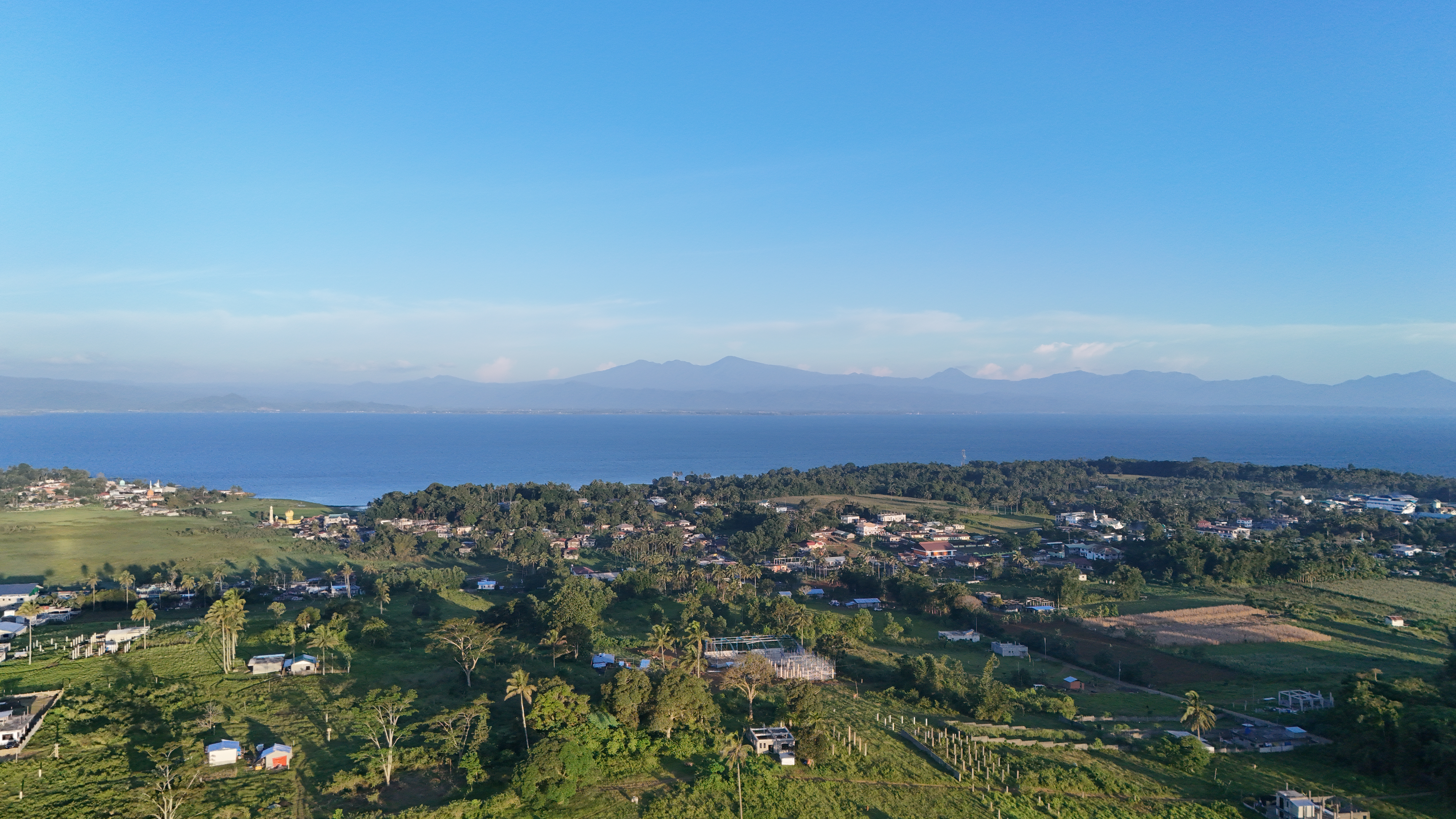
Lake Lanao on 14 September 2026
Salika B. Maguindanao did not have to make the trip. She lives and works out of Iligan now, like a lot of Meranaw artisans do. But on Monday morning she travelled back to Lanao del Sur anyway, because her name was on a list here and she wanted to be counted on it.
“I travelled from Iligan to Marawi just to cast my vote,” she says, “and be part of the historic moment of choosing the leaders for our Parliament government.”
She was not alone, and that is the story. When the Commission on Elections tallied September 14, turnout across the Bangsamoro reached 82.41 percent, nearly five points above the region’s showing in last year’s national midterms. Lanao del Sur, carrying more than 727,000 registered voters and close to a third of the entire regional electorate, was one of only four areas where voting opened on time at every single center.
Not just in the capital. In Wao, five hours east through the highlands. In Malabang, seventy-one kilometers down on the Illana Bay coast. In Tugaya, in Balindong, in Butig, in Ganassi, in all thirty-nine municipalities and the one component city that make up this province. No fatalities. No failure of elections. Just people queuing in the sun to choose a parliament for the first time in our history.
For decades, leadership here was appointed, negotiated, inherited, or imposed. On Monday, after four postponements stretching back to 2022, roughly 2.39 million Bangsamoro voters filled 80 parliamentary seats. Lanao del Sur elected nine of them. The Serbisyong Inklusibo-Alyansang Progresibo Party took six, the United Bangsamoro Justice Party the rest. Armed Forces chief of staff Gen. Antonio Nafarrete called the exercise generally peaceful and successful.
Those are the headlines. The more interesting story is what has been happening across this province while the rest of the country wasn’t watching.
A hotel with a good problem
At Ranaw Business Hotel, manager Abdul Khalique Lomondot has noticed a pattern in how visitors arrive.
“Guests often arrive with modest expectations,” he says. Then they check in, look around, and change their minds. What comes back on the feedback forms is appreciation for the cleanliness, the welcoming atmosphere, the attentive service, and, repeatedly, the design and architecture.
There is one complaint that keeps surfacing, and it is the kind a tourism economy dreams about. Guests are disappointed there aren’t more rooms.
RBH is not yet a year old and still technically in soft opening. In that time, Lomondot reports a steady climb in bookings, guest patronage and overall business activity. A property that hasn’t formally launched is already turning people away.
That is a market signalling something, and the signal carries well past the capital. Balindong has Misty Cottage by the Hill and Slangan Island. Wao has Mountain Spring Resort and Jaziyas Pagul View. Butig has the Sumpit Nature’s View eco-park. The beds exist. There are simply nowhere near enough of them, and almost no one outside the province knows they are there.
What the artisans’ order books say
Salika works in langkit, the woven bands that join the panels of a malong and carry the geometry of Meranaw design in a strip a few inches wide. Her customers are not, for the most part, tourists.
“Our buyers are mostly other makers who buy langkit as their materials for certain projects,” she says. They order in bulk. Most are from outside the region. Some are longtime suki, regular customers; others she has never met and found her through social media. “I think that’s the power of the internet combined with reliability and trust.”
Which is a polite way of describing a supply chain with a hole in it. The craft is in demand, the buyers exist, and what’s missing is the last mile: the visitor who walks in, watches the work happen, and pays what forty hours of labor is actually worth.
The pattern repeats across the province. Tugaya, on the western shore of the lake, is known as the Industrial Capital of Lanao del Sur and is recognized by UNESCO as a home for culture and heritage. Practically every family there works metal. Using the lost-wax method, they produce gongs, kettles, betel boxes and brassware that ends up in museums and private collections worldwide, while the makers themselves see a fraction of what the work commands abroad.
The teaching side has the same shape. Salika has no apprentice at the moment, though her former trainees, all younger than her, have said they want to learn. The obstacle is space. “I think that we need a permanent place to really teach the craft,” she says, crediting the School of Living Traditions in Marawi City for providing exactly that.
Worth pausing on. The SLT was among the facilities built and turned over under the Marawi rehabilitation program. Infrastructure built after a siege is now keeping a centuries-old craft alive. Tugaya, Buadiposo Buntong, Bacolod-Kalawi and a dozen other towns have artisans who need the same thing and don’t have it yet.
The province most Filipinos have never seen
Lanao del Sur is nicknamed the Cradle of Muslim Art, and the inventory backs it up.
Lake Lanao is one of the oldest lakes on Earth, roughly ten million years old, holding fish species found nowhere else. But it is not the only one. Lake Dapao sits serene below Mount Baya along the Ganassi-Binidayan road. There are Lake Butig, Lake Uyaan. Lininding Falls in Wao, Kanapnapan and Sumpitan elsewhere. Salikata National Park lies in Lumba-Bayabao, Rungkunan in Ditsaan-Ramain and Tagoloan II. Mount Ragang rises to 2,815 meters, the highest point in the whole region.
Along the lakeshore stand the torogan, ancestral royal houses carved with okir work so intricate a master spends years on a single panel. There is the Bacolod Grande Masjid, the Pagayawan Masjid, the Grand Masjid in Marawi, the Aga Khan Museum at Mindanao State University. And there is the Darangen, the chanted epic carried across generations, recognized by UNESCO as part of humanity’s shared heritage.
The calendar is filling too. Pakaradyaan o Sarimanok runs through July for the provincial founding anniversary. Kariyala Festival brings Wao’s mixed communities together every February. The Langkit Festival anchors Marawi’s charter celebration.
Ask Salika what a week would look like if visitors came in real numbers and she doesn’t hesitate.
“It will be interesting and fun, because we have so much to show them and offer them here.” The festivals give them a stage, the SLT a venue. “We believe that tourism is a major economic driver for our community to thrive and prosper.”
What nine seats can now build
The members proclaimed this week will serve term until June 30, 2031, after which Bangsamoro elections synchronize with national polls on a three-year cycle. Nearly five years of continuity, which matters more than it sounds.
Nine Lanao del Sur members now sit in a legislature with a mandate. They can pass a tourism code that outlives one administration. Fund heritage conservation so the torogan get restored rather than photographed as they weather. Sit across from the Department of Tourism in Manila as a partner rather than a placeholder. Accredit and protect homestay operators, guides, boatmen and weavers in every municipality, not only the accessible ones.
They could also finance the two things this reporting kept running into across the province: rooms, and permanent workshop space.
Salika’s hope is not a policy wishlist. “I am really hopeful that those who were voted by the people can really make great changes in our community,” she says, “because they uphold great power that will affect the way we move forward in the years to come. Peace and prosperity lies in our hands and to those we help seat on power. In Shaa Allah, may they be given wisdom and empathy towards the poor and powerless.”
The economy of staying
Culture without an economy behind it becomes a performance for grants. Culture with an economy behind it becomes a reason for the next generation to stay.
That is the whole argument, and it has little to do with occupancy rates. A weaver in Marawi with apprentices, a brassworker in Tugaya paid fairly, a guide in Wao who can live on guiding: each is a young person who does not board the bus for Manila.
Monday bought this province a five-year runway and a mandate. Salika travelled home to help hand it over. Lomondot has guests asking for rooms he doesn’t have yet.
Thirty-nine municipalities, one city, one very old lake. All of it waiting for you to see it.

Leave a Reply